
| Table of Contents |  |
|
Case Report
| ||||||
| Peculiar case of calcifying fibrous tumor presenting as a free-floating intraperitoneal body | ||||||
| Jia Lin Ng1, Hema Parag Salkade2, Sulaiman Bin Yusof1, Wee Teng Poh2, Andrew Siang Yih Wong1 | ||||||
|
1Department of General Surgery, Changi General Hospital, Singapore.
2Department of Pathology, Changi General Hospital, Singapore. | ||||||
| ||||||
|
[HTML Abstract]
[PDF Full Text]
[Print This Article]
[Similar article in Pumed] [Similar article in Google Scholar] |


| How to cite this article: |
| Ng JL, Salkade HP, Yusof SB, Poh WT, Wong ASY. Peculiar case of calcifying fibrous tumor presenting as a free-floating intraperitoneal body. J Case Rep Images Surg 2015;1:29–33. |
|
Abstract
|
|
Introduction:
Calcifying fibrous tumor (CFT) is a rare, benign soft tissue tumor of unknown etiology. Previously reported in the subcutaneous and deep tissues of the extremities and trunk, sporadic accounts of intra-abdominal CFTs associated with the peritoneum, mesentery and bowel have recently arose.
Case Report: We present a previously unreported entity of a free-floating intra-abdominal presentation of CFT. We discuss its classical histological and immunohistochemical findings, possible differential diagnoses, and its implications on clinical management. Conclusion: Calcifying fibrous tumor (CFT) should be considered as a possible differential diagnosis of free-floating peritoneal masses | |
|
Keywords:
Calcifying fibrous pseudotumor, Free floating, Inflammatory myofibroblastic tumor, Peritoneal loose body
| |
|
Introduction
| ||||||
|
Calcifying fibrous tumor (CFT) is a rare, benign soft tissue tumor of unknown aetiology. It is characterised by the presence of paucicellular hyalinized collagenous fibrous tissue with psammomatous or dystrophic calcification and focal lymphoplasmacytic infiltrate [1]. It is more commonly found in the subcutaneous and deep tissues of the extremities, trunk, neck, and axilla [1]. Recently, sporadic case reports have revealed that CFT can also arise from the pleura, mediastinum, peritoneum, mesentery, bowel and adrenal gland [2] [3] [4][5] [6]. However, free-floating CFT within the peritoneal cavity has, to the best of our knowledge, never been previously reported. We present herewith the first case of this previously unknown entity. | ||||||
|
Case Report
| ||||||
|
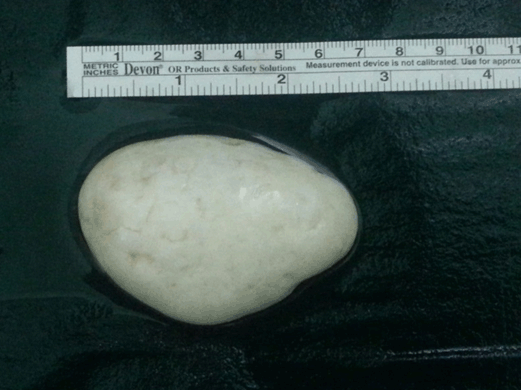
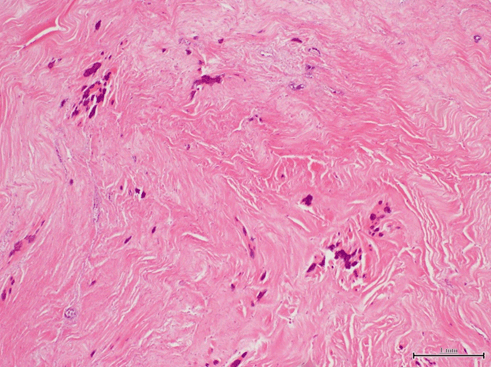
A 32-year-old Filipino female presented to the emergency department with fever and migratory right iliac fossa pain for two days. A computed tomographic scan of the abdomen and pelvis showed acute appendicitis. This incidentally also revealed a 7x5 cm well-defined soft tissue mass with internal coarse calcifications in the right adnexal region (Figure 1). The uterus and both ovaries were normal. Tumor markers, including cancer antigen 125, carcinoembryonic antigen and alpha-fetoprotein, were normal. On diagnostic laparoscopy, the mass in question was visualized in the pelvis (Figure 2). However, it was free-floating in the peritoneal cavity. It was neither attached to, nor in relation to, any intra-peritoneal organ or peritoneum. The uterus and bilateral ovaries were normal and discrete from the pelvic mass. There were no other abnormalities in the bowel. Laparoscopic appendectomy and retrieval of the pelvic mass through an extended vertical umbilical incision was performed. The patient made an uneventful recovery and was discharged well two days later. She remains asymptomatic on follow-up six months later. Gross examination of the pelvic mass revealed a well-circumscribed firm mass measuring 7.0x5.0x2.0 cm. It appeared pearly-white with smooth external surface. The cut surface had a vague whorled appearance. Formalin-fixed, paraffin-embedded sections were stained with routine hematoxylin and eosin, amyloid and immunohistochemical stains. Immunohistochemical primary antibodies were directed against Smooth Muscle Actin (SMA- DAKO, 1A4, 1:1000), Anaplastic Lymphoma Kinase ALK-1(NOVOCASTRA LEICA, 5A4, 1:60), Inhibin (DAKO, R1, 1:10), Caldesmon (DAKO, h-CD, 1:70), CD117, DOG-1, Beta-catenin, Bcl2, CD56, ER, PR, S100, CD99, Vimentin, Calretinin, WT-1, Factor XIIIa, and CD34. Histological examination showed a hypocellular lesion predominantly composed of dense hyalinized fibrous stroma with multiple foci of dystrophic calcification and focal osteoid formation admixed with few spindle cells. The periphery of the lesion had a scanty rim of benign spindle cells with few scattered lymphocytes, neutrophils and focal benign mesothelial cells. There was no evidence of atypia, mitotic figures or malignancy (Figure 3) and (Figure 4) . The benign spindle cells at the periphery of the tumor were focally positive for SMA, Vimentin, Caldesmon, CD34 and Factor XIIIa. Focal mesothelial cells lining the periphery are positive for Calretinin. These cells are negative for Alk-1 (Figure 5), CD117, DOG-1, Beta-catenin, Bcl2, CD99, ER, PR, inhibin, WT-1, CD56, S100 and Congo red which rules out inflammatory myofibroblastic tumor, GIST, fibromatosis, solitary fibrous tumor, ovarian fibroma, schwannoma and amyloidoma respectively. These features favored a diagnosis of calcifying fibrous tumor. | ||||||
| ||||||
| ||||||
| ||||||
| ||||||
| ||||||
|
Discussion
| ||||||
|
Calcifying fibrous tumor (CFT) is a rare benign tumor originally described by Rosenthal and Abdul-Karim as a childhood fibrous tumor containing psammoma bodies [7]. Fetsch later reported a case series of 10 similar subcutaneous and visceral soft tissue lesions and named them 'calcifying fibrous pseudotumors' [8]. However, a subsequent study by Nascimento found that a subset of cases developed local recurrence, and hypothesized that this was a benign mesenchymal neoplasm with a propensity for local recurrence [9]. In 2002, the World Health Organisation renamed it as a 'calcifying fibrous tumor' to highlight these findings [1]. Clinically, CFTs mainly affect children and young adults, with a slight predilection for females [8]. They have been described to arise from soft tissues of the extremities, trunk, neck, groin, and axilla [1]. Intra-abdominal CFT is uncommon, and isolated case reports have reported these tumors attached to the mesentery, peritoneum and even within viscera of the small bowel and rectum [2] [3] [4] [5] [6]. Histologically, this lesion is a heavily collagenized paucicellular fibrous lesion composed of bland spindle cells admixed with scattered psammomatous and/or dystrophic calcification and variable mononuclear inflammatory infiltrate. Immunohistochemically, the spindle cells of CFTs express Vimentin, factor XIIIa and is variably positive for CD34, rarely focal positive for actin and desmin. S-100, Keratin, Inhibin and ALK-1 are consistently negative [9]. Free-floating intra-peritoneal CFTs have never been previously reported. In this case, the tumor was located near the right adnexa due to the effects of gravity, with no attachments to the peritoneum or intra-peritoneal organs. Important differential diagnoses of such calcified pelvic masses include giant loose peritoneal bodies and inflammatory myofibroblastic tumor. If the lesion is attached to serosa or mesentery, one should also consider spindle cell tumors like gastrointestinal stromal tumors, leiomyoma, schwannomas and desmoid tumors. Due to its location in the right adnexa, ovarian fibroma was also considered. However, this was ruled out as both ovaries were normally visualized. Ovarian fibroma also usually present with intersecting bundles of moderately spindle cells, often in a stori-form pattern without nuclear atypia and in-frequent mitotic figures. They often show focal inhibin staining. In the present case, inhibin was negative. Loose peritoneal bodies can be found free-floating within the peritoneal cavity, but has a typical cut-appearance of a whitish outer core surrounding a yellow soft inner core. It is postulated to be a result of torsion, saponification and calcification of appendix epiploicae, with subsequent detachment to become a free-floating peritoneal body. Just like in our case, it can grow to a sizeable diameter, measuring more than 6 cm in giant loose peritoneal bodies. Gross morphology and histology can easily differentiate this from CFTs [10] [11]. Authors have previously alluded that CFTs may represent sclerosing end-stage inflammatory myofibroblastic tumors (IMT), but more recent studies demonstrate that CFTs exhibit different histological, immunohistochemical, and electron microscopic features from IMTs and have a different biological behavior [12] [13] [14] [15]. It is important to differentiate CFT from IMT, which according to recent cytogenetic study have been thought to be neoplastic in nature [16]. IMTs are often devoid of calcifications and possess a proliferation of myofibroblastic spindle cells with an inflammatory cell infiltrate. They stain positively for ALK and Vimentin with variable positivity for Actin and CD34. Recently, clonal cytogenetic abnormalities involving the anaplastic lymphoma kinase (ALK) gene on chromosome 2p have also been identified in IMT. CFTs in contrast show bland and scanty spindle cells in a densely hyalinized collagenous stroma, with foci of dystrophic calcification. CFT shows variable immunoreactivity for CD34 and a-isoform actin. It rarely expresses ALK by immunohistochemistry, suggesting that CFT is a different clinicopathological entity with no convincing evidence to support an association between CFT and IMT [9] [13]. Some authors have also suggested CFT to have morphologic and immunohistochemical overlaps with known IgG4-related sclerosing diseases [15]. This is, however, characterized by elevated serum IgG4 levels and shows dense infiltration of IgG4-positive plasma cells in different organs and tissues, which is not seen in our case [17]. The prognosis of CFT remains excellent, with occasional local recurrence after complete or incomplete excision. The rate of recurrence ranges from 17–30% in the larger series [8] [9]. Definitive treatment of CFT lies in complete local excision with clear margins, especially in cases where preoperative histological diagnosis of a free-floating intra-peritoneal mass like in this case is almost impossible to obtain otherwise. No recurrence was observed on short-term follow-up. Our understanding of the etiology and pathogenesis of CFTs remains scanty, with no accepted guidelines for follow-up because of its rarity. In this present case, clinical follow-up may not be of high yield since the lesion was discovered incidentally. Follow-up with imaging modalities should therefore be at the clinician's discretion. | ||||||
|
Conclusion
| ||||||
|
Calcifying fibrous tumor (CFT) should be considered as a possible differential diagnosis of free-floating peritoneal masses. Awareness of CFT and its distinctive features is important to avoid a diagnostic pitfall caused by histologic similarities to other spindle cell or calcifying lesions in unusual locations. Histology, together with the correct immunohistochemical stains will allow one to make the correct diagnosis. Further studies about its presentation, pathogenesis, immunohistochemical and histopathological features will undoubtedly add to our collected understanding of CFTs and be invaluable to clinicians managing this rare but interesting tumor. | ||||||
|
References
| ||||||
| ||||||




|
[HTML Abstract]
[PDF Full Text]
|
|
Author Contributions
Jia Lin Ng – Substantial contributions to conception and design, Acquisition of data, Analysis and interpretation of data, Drafting the article, Revising it critically for important intellectual content, Final approval of the version to be published Hema Parag Salkade – Analysis and interpretation of data, Revising it critically for important intellectual content, Final approval of the version to be published Sulaiman Bin Yusof – Analysis and interpretation of data, Revising it critically for important intellectual content, Final approval of the version to be published Wee Teng Poh – Analysis and interpretation of data, Revising it critically for important intellectual content, Final approval of the version to be published Andrew Siang Yih Wong – Analysis and interpretation of data, Revising it critically for important intellectual content, Final approval of the version to be published |
|
Guarantor of submission
The corresponding author is the guarantor of submission. |
|
Source of support
None |
|
Conflict of interest
Authors declare no conflict of interest. |
|
Copyright
© 2015 Jia Lin Ng et al. This article is distributed under the terms of Creative Commons Attribution License which permits unrestricted use, distribution and reproduction in any medium provided the original author(s) and original publisher are properly credited. Please see the copyright policy on the journal website for more information. |
|
|